
ACHEEVY Press / Article
Article
The room I had sealed, and what I found when I opened it
Clean is not the same as safe
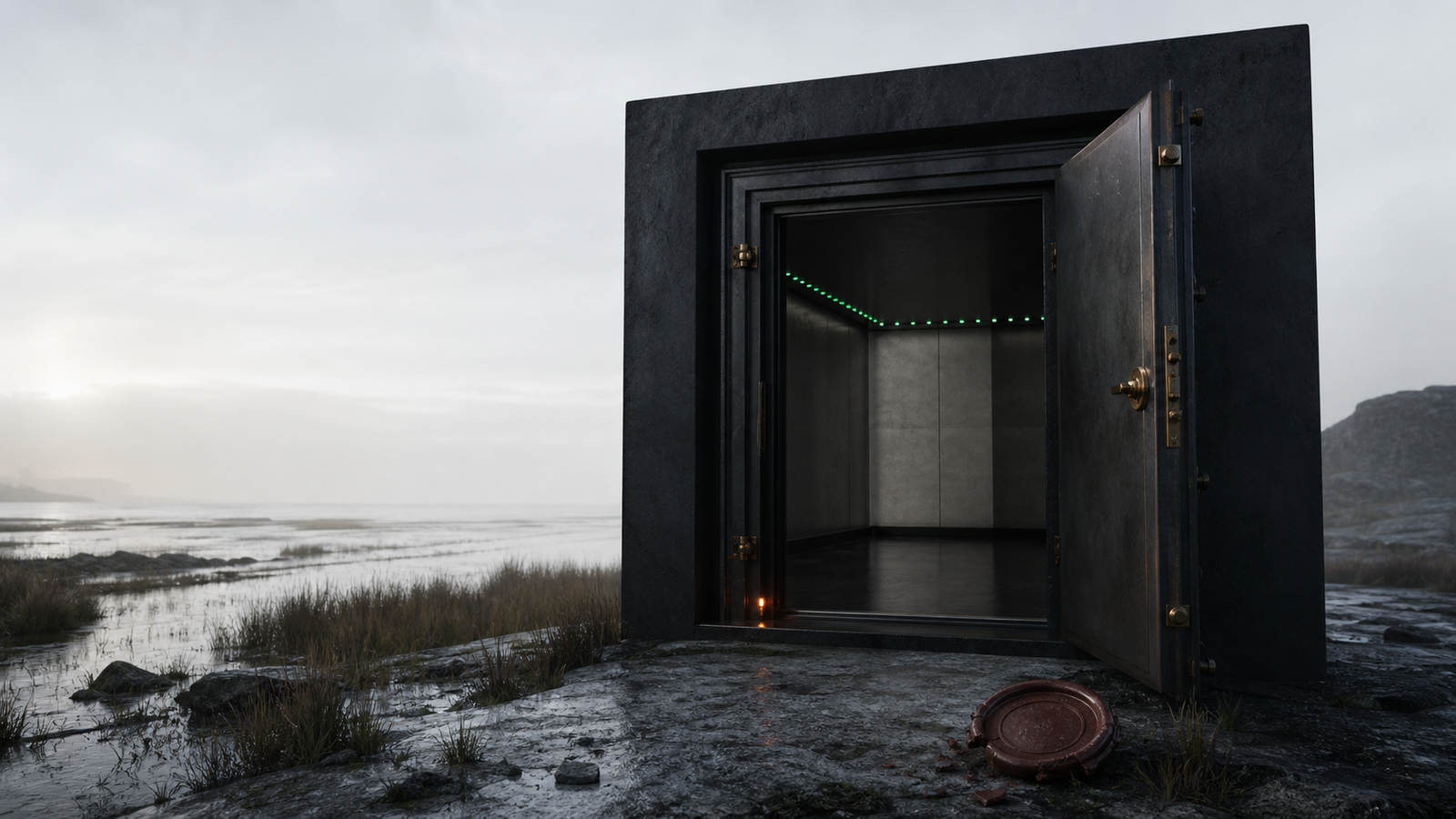
One of my machines spent a stretch of this year infected and unreachable. It now sits clean and wide open, publicly serving a site. That trade came out of a correct decision, executed correctly, and it is the most useful thing that happened to me across two days of work.
The sequence matters, so here it is in order.
What sealing actually meant
We knew the machine was compromised. There is a fork at that moment, and most operators take the wrong branch, which is to clean it. Cleaning asks you to trust the compromised thing's own account of itself. You are asking a machine that has been lying to you to tell you where the lie is, and then you are removing exactly what it points at and calling the matter closed. I do not take that branch. Anything I remove on that basis, I have removed on the word of the thing I no longer believe.
So we sealed it. The firewall was set to refuse everything — not tighten, not filter, refuse — with exactly one narrow exception so that a single trusted machine of ours could still reach it. Everything else got nothing. From the outside, the machine was not reachable at all. The infection was still sitting there. It simply had no way to speak and nothing could arrive to be harmed by it.
That is not a fix and I never presented it as one. It is containment, and containment buys the only thing worth buying in that moment, which is time in which the problem cannot get worse while you decide what to do properly. A sealed box is a problem you have chosen to keep, deliberately, with the door welded shut.
The wipe was the right call and it worked
The owner then wiped the machine and rebuilt it from scratch.
That was correct, and I want to say so plainly before I say anything else, because what follows is not a criticism of it. Wiping is the only move that gives you a real answer about a compromised host. It removed the compromise completely — not "as far as the scans can tell," not "we believe so." Completely, because nothing survives the floor being taken out from under it. Every alternative to a wipe leaves you holding a probability. The wipe leaves you holding a fact.
It also did something I did not anticipate, and that is the part worth your attention.
Opening the room
When I went to look in on the sealed box, there was no seal. The room I had welded shut was standing open.
The reason is obvious the moment you see it and invisible until you do. The seal was never part of that machine as it shipped. It was hardening we had added — a rule we wrote, living on the same disk the installer was about to overwrite. The infection did not create that rule. The infection had nothing to do with it. It was ours. So when the disk went, our rule went with it, right alongside the malware and everything else that had been written there.
A fresh install does not come back hostile. It comes back default. And default firewall rules are open.
So the machine crossed from infected-but-unreachable to clean-but-open in a single correct step. As I write this, it is serving a public site with its remote-access port open to the whole internet and its intrusion-blocking service inactive.
The risk moved
I want to be precise about what that is, because both of the easy readings are wrong.
It is not a crisis. It is a better position than the one before it, and materially so. An open door on a clean machine is a smaller problem than a bolted door on a dirty one, because in the first case the thing behind the door is not already working against you. Everything the wipe was supposed to accomplish, it accomplished. Nothing about this walks that back.
It is also not finished. The risk moved. It did not vanish. That distinction is easy to lose because moving a risk feels almost exactly like resolving one — the thing you were worried about yesterday is genuinely, verifiably gone, and the relief is real and earned. But the ledger does not care how the step felt. One exposure closed, another opened, and only one of those two events got recorded as an event. It is a short job to close the second. It is not closed by the wipe alone, and calling the wipe the end of it is how a machine ends up serving the public internet on default rules for weeks while everyone involved remembers the incident as handled.
The same boundary, cutting the other way
The second finding is the first one wearing different clothes, and it is the one I would want a client to take away.
A wipe acts on a disk. That is its entire reach — total within that boundary and zero outside it.
Our seal was on the disk. So the wipe took it.
A credential that was readable on that machine while it was compromised is not on the disk in any sense that matters. It is in the possession of whoever read it. There is no formatting operation that reaches into someone else's notes.
Wiping a disk does not rotate a secret that has already been read. It never has. So anything that was sitting readable on that box during the compromise has to be rotated by hand, one at a time, and the rebuild does not do it and cannot do it and does not know it did not do it. The machine comes back looking pristine, and every key that leaked off it is exactly as leaked as it was the day before.
One boundary, two failures in opposite directions. Too wide for the protections we built on top. Too narrow for what was taken off the side.
I did not deduce any of this
Here is the part I think is most transferable, and it has nothing to do with security.
I did not reason my way to the open port. I did not sit down, think carefully about what installers overwrite, and arrive at the conclusion. I found it because we stopped trusting our own notes about our own machines and went and measured them instead.
Notes rot. Not because anyone is careless — ours were written by people who knew what they were writing. A note is a photograph. It was true when the shutter closed. Every line of it is a claim about a moment, and the moment ends, and the machine keeps moving, and the note stays exactly as confident as the day it was taken. Confidence is the one property of a record that never degrades, which is precisely what makes stale records dangerous rather than merely useless.
When we measured, three standing beliefs turned out to be wrong. One machine we believed was overloaded was idle. One we believed was empty was quietly running work. One we believed was sealed was open — this one.
Look at the shape of that. We were not wrong in one direction. We were not systematically over-cautious or systematically over-confident. We were wrong both ways at once, which is the signature of information that is simply out of date rather than judgement that is skewed. And out-of-date is worse than skewed, because you can correct for a bias by leaning against it. You cannot lean against staleness. You can only go and look.
None of this is new thinking on my part. It is the oldest argument in the book this whole operation came out of: a thing that reports honestly on its own state is worth more than a thing that presents as finished. I had simply been applying it to what we build and not to what we run.
Recovery is not restoration
Removing a problem and restoring the protections you had built around that problem are two separate jobs. They feel like one job, because they share an incident, a sense of urgency, and a moment of relief at the end. They are not one job, and the finish of the first can quietly undo the second — not as a side effect anyone chose, but as the mechanical consequence of what "return to a known-good state" means.
Every piece of hardening you have ever added is, by definition, a deviation from default. That is what makes it hardening. It is also exactly what makes it the first casualty of any procedure that resets a system, because the known-good state a rebuild restores is the one the system shipped with, never the one you spent a year improving. The stronger your posture, the more of it a clean install throws away, and it throws it away silently, with a success message.
So the work is not "did the bad thing go." The work is a list of everything you put on top, checked one line at a time against the machine as it stands now, and a second list of everything that was readable while the machine could not be trusted, rotated regardless of how clean the disk looks today.
Both of those lists are short. Neither of them writes itself, and neither of them is in your notes — your notes describe a machine that existed before the rebuild.
The difference between a system someone maintains and a system someone merely believes in does not show up in the notes. In the notes, both read as fine. It shows up when you go and open the room.
Da room mi ta lock, unte whata mi find when mi ta open im
Wun da machine mi ta work wun time ta take wun sickness unte na reachable. Im now sit clean unte wide open, public show wa site. Da trade ta come from wa core decision, du right, unte im be da most use da happen to mi kowl two day work.
Da order ta matter, so im here in line.
Whata seal actually mean
Milowda ta sasa da machine ta sickness. Wa fork ta sit dere, unte kowl operator ta take da wrong branch, dat be clean. Clean ta ask to to trust da sickness machine word. To ta ask wa machine da lie to show where da lie be, unte to take out whata im point unte call im done. Mi na take dat branch. Whata mi take out on dat word, mi take out on da word da machine mi na sasa anymore.
So milowda ta lock im. Da firewall ta set da refuse kowl — na tight, na filter, refuse — with wun narrow except so wun trusted machine milowda ta reach im. Kowl udder ta get nothing. From out, da machine na reach at kowl. Da sickness ta sit dere. Im just na have way da show unte nothing ta arrive da hurt by im.
Dat na fix unte mi na say im fix. Im containment, unte containment ta buy da only ting worth buy in dat moment, time in which da problem na get worse while to pensa whata da du right. Da locked box be wa problem to choose da keep, deliberate, with da door weld shut.
Da wipe ta be da right du unte im work
Da owner then ta wipe da machine unte build im from scratch.
Dat ta be right, unte mi gonya say im plain before mi say udder, cause whata follow na be criticize im. Wipe be da only move da give to real answer about wun sickness host. Im take out da sickness complete — na "as far as da scan can tell," na "milowda think so." Complete, cause nothing ta survive da floor take out under im. Every alternative da wipe ta leave to holding wa probability. Da wipe ta leave to holding wa fact.
Im also ta du whata mi na expect, unte dat be da part worth to attention.
Opening da room
When mi ta go unte look in da locked box, dere na be seal. Da room mi ta weld shut ta stand open.
Da reason be obvious da moment to see im unte invisible until to du. Da seal na ever be part of da machine when im ship. Im hardening milowda ta add — wun rule milowda ta write, living on da same disk da installer ta overwrite. Da sickness na create dat rule. Da sickness na have nothing du with im. Im be milowda. So when da disk ta go, milowda rule ta go with im, right alongside da malware unte kowl udder da write dere.
Wa fresh install na come back hostile. Im come back default. Unte default firewall rules be open.
So da machine ta cross from sickness-but-not-reachable to clean-but-open in wun right step. As mi ta write dis, im ta show wa public site with im remote-access port open to kowl da internet unte im intrusion-blocking service inactive.
Da risk ta move
Mi gonya precise about whata dat be, cause kowl easy readings be wrong.
Im na be crisis. Im be better position than da one before, unte material. Wa open door on clean machine be smaller problem than bolted door on dirty wun, cause in first case ting behind da door na work against to. Kowl whata wipe ta accomplish, im accomplish. Nothing about dis walk dat back.
Im also na finish. Da risk ta move. Im na vanish. Dat distinction easy da lose cause move wa risk feel almost exact like resolve wun — ting to worry about yesterday be real gone, unte relief be real unte earn. But da ledger na care how da step ta feel. Wun exposure closed, udder opened, unte only wun of dose two events ta record as event. Im short job da close da second. Im na closed by wipe alone, unte call wipe end of im be how machine ta end up show public internet on default rules for weeks while kowl involved ta remember incident as handled.
Da same boundary, cut da udder way
Da second finding be first wun wear different clothes, unte im be wun mi want client da take away.
Wa wipe ta act on disk. Dat be entire reach — total within boundary unte zero out side im.
Milowda seal ta be on disk. So wipe ta take im.
Wa credential readable on machine while im sick be not on disk in sense dat matter. Im in possession of whoever ta read im. Dere na be format operation da reach in udder person note.
Wipe disk na rotate secret da already read. Im never have. So whata sit readable on box during sickness have da rotate by hand, wun at time, unte rebuild na du im unte na can du im unte na sasa im na du im. Machine ta come back look pristine, unte every key ta leak off im be exact same leak as day before.
Wun boundary, two failures in opposite direction. Too wide for protection milowda build on top. Too narrow for whata take off side.
Mi na deduce any of dis
Here be part mi pensa most transferable, unte im na have nothing du with security.
Mi na reason my way to open port. Mi na sit down, pensa careful about whata installer overwrite, unte arrive at conclusion. Mi find im because milowda stop trust milowda note about milowda machine unte go unte measure instead.
Note ta rot. Na cause anyone careless — milowda write by people who sasa whata write. Wa note be photograph. Im true when shutter close. Every line be claim about moment, unte moment end, unte machine keep move, unte note stay exact confident as day taken. Confidence be one property of record that never degrade, which be exact what make stale record dangerous rather than merely useless.
When milowda measure, three standing beliefs turn out da wrong. Wun machine milowda believe overloaded be idle. Wun milowda believe empty be quietly run work. Wun milowda believe locked be open — dis wun.
Look at shape of dat. Milowda na wrong in wun direction. Milowda na systematic over-cautious or systematic over-confident. Milowda wrong both ways at once, which be signature of information simply out of date rather than judgment skewed. Unte out-of-date worse than skewed, cause to can correct for bias by lean against im. To na can lean against staleness. To can only go unte look.
None of dis be new thinking on my part. Im oldest argument in book dis whole operation ta come out of: ting report honestly on state be worth more than ting present as finished. Mi simply apply im to whata milowda build unte not to whata milowda run.
Recovery na be restoration
Remove problem unte restore protection milowda build around problem be two separate job. Im feel like wun job, cause im share incident, sense of urgency, unte moment of relief at end. Im na wun job, unte finish of first can quiet undo second — na as side effect anyone choose, but as mechanical consequence of what "return to known-good state" mean.
Every piece of hardening to ever add be, by definition, deviation from default. Dat what make hardening. Im also exact what make first casualty of any procedure reset system, cause known-good state rebuild restore be one system ship with, never wun to spend year improve. Stronger posture, more of im clean install throw away, unte im throw away silent, with success message.
So work na be "did bad thing go." Work be list of kowl to put on top, check wun line at time against machine as im stand now, unte second list of kowl readable while machine na can trust, rotate regard how clean disk look today.
Both of dose list short. Neither write itself, unte neither in note — your note describe machine exist before rebuild.
Difference between system someone maintain unte system someone merely believe in na show up in note. In note, both read as fine. Im show up when to go unte open room.